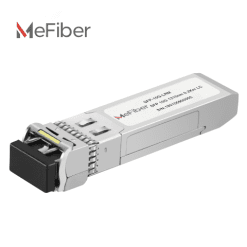

Overview
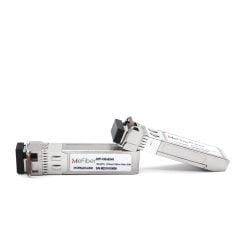
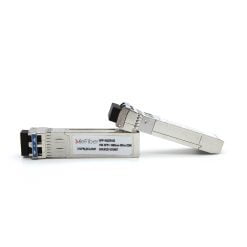
This is a high-performance, industrial-grade optical transceiver, fully compatible with the Cisco SFP-10G-ZR-I. It is specifically engineered to operate reliably in harsh environmental conditions. This rugged module provides a robust and cost-effective solution for establishing long-haul 10-Gigabit Ethernet links in challenging deployments such as outdoor enclosures, unconditioned cell sites, and factory floors.
Designed to the 10GBASE-ZR standard, this SFP+ module uses a high-power 1550nm EML laser to transmit data over single-mode fiber for distances up to 80km. Its industrial rating ensures stable operation across a wide temperature range of -40°C to 85°C. This makes it an essential component for service provider backhaul, metro Ethernet, and utility networks where network hardware is exposed to the elements.
Key Features
- 100% compatible with platforms coded for Cisco SFP-10G-ZR-I.
- Supports 10Gbps data rates for 10GBASE-ZR/ZW applications.
- Industrial Grade for operation in harsh temperatures (-40°C to 85°C).
- Extended reach up to 80km over Single-Mode Fiber (SMF).
- High-performance cooled 1550nm EML transmitter and APD receiver.
- Standard Duplex LC connector for common fiber optic cables.
- Hot-pluggable SFP+ MSA-compliant footprint for easy deployment.
- Built-in Digital Optical Monitoring (DOM/DDM) for real-time diagnostics.
Applications
The rugged design and extended reach of the SFP-10G-ZR-I compatible module make it ideal for demanding applications. It is widely used in telecommunications for mobile backhaul and access networks, in utility and energy sector communications, and for intelligent transportation systems (ITS). Furthermore, it is a perfect choice for creating long-distance campus backbones or data center interconnects (DCI) where fiber paths exceed the limits of standard LR or ER optics.
Specifications
| Parameter | Value |
|---|---|
| Compatible Part Number | SFP-10G-ZR-I |
| Form Factor | SFP+ |
| Data Rate | 10.3125 Gbps |
| Standard | 10GBASE-ZR |
| Wavelength | 1550nm |
| Max Distance | 80km |
| Fiber Type | Single-Mode Fiber (SMF) |
| Connector Type | Duplex LC/UPC |
| Transmitter | EML Laser |
| Receiver | APD |
| DOM/DDM Support | Yes |
| Operating Temperature | -40°C to 85°C (-40°F to 185°F) |
Cross-Platform Compatibility
While designed as a direct replacement for the Cisco SFP-10G-ZR-I, this module’s adherence to MSA (Multi-Source Agreement) standards ensures broad compatibility. It can be successfully deployed in a variety of industrial networking equipment from other leading manufacturers. Below is a list of potential equivalent part numbers this module can replace:
| MANUFACTURER | EQUIVALENT PART NUMBER |
|---|---|
| Juniper | JNP-SFP-10GE-ZR-I |
| Arista | SFP-10G-ZR-I |
| MSA Generic | SFP-10G-ZR-80-I |
| Ciena | XCVR-S80U55I |
Advantages
The primary advantage of this industrial 10G SFP+ module is its exceptional reliability in extreme conditions. Unlike commercial-grade optics that can fail in high heat or freezing cold, this transceiver is built with components that guarantee performance, ensuring network uptime in mission-critical industrial applications. This ruggedness, combined with its 80km reach, provides a versatile, high-performance connectivity solution.
Additionally, it offers significant cost savings over OEM industrial optics. This allows network architects to deploy resilient, long-haul 10G networks without exceeding their budget. The integrated DOM functionality provides vital, real-time insights into the module’s status, enabling proactive maintenance and rapid troubleshooting even in remote, hard-to-access locations.
FAQ (Technical & Product Questions)
1. What is an Industrial SFP+ module?
An Industrial SFP+ module is a transceiver built with components that can withstand a wider range of operating temperatures, typically from -40°C to 85°C. This makes it suitable for deployment in outdoor cabinets, factory floors, and other non-climate-controlled environments where standard modules would fail.
2. What does the “-I” in SFP-10G-ZR-I stand for?
The “-I” suffix in the part number SFP-10G-ZR-I designates that the module is Industrial-rated. It confirms that the transceiver is designed and tested to operate reliably within the industrial temperature range of -40°C to 85°C.
3. What is the difference between 10GBASE-ZR and 10GBASE-ER?
The main difference is the reach and the laser type. 10GBASE-ER (Extended Reach) is rated for 40km. 10GBASE-ZR (an unofficial but widely adopted standard) is designed for even longer distances up to 80km and requires a more powerful, higher-quality EML laser and an APD receiver.
4. Can I use this SFP-10G-ZR-I module in a regular office switch?
Yes, you can. An industrial-rated module will work perfectly fine in a standard commercial environment (0°C to 70°C). The industrial rating simply means it is built to tolerate a much wider range of conditions, making it more robust overall.
5. Is this transceiver compatible with Cisco industrial switches?
Absolutely. This module is programmed to be fully compatible with Cisco’s industrial switch lines, such as the Catalyst IE series, as well as any other Cisco device that requires the SFP-10G-ZR-I part number for 80km links.
6. Does an 80km link require special fiber?
An 80km link does not require special fiber, but it must use high-quality Single-Mode Fiber (SMF) with low overall attenuation (signal loss). It is also common to use an inline optical amplifier for links approaching this distance to ensure a stable signal at the receiver.
7. What type of laser does this 10G 80km SFP+ use?
To achieve the 80km distance, this module utilizes a high-performance, cooled EML (Electro-absorption Modulated Laser) operating at the 1550nm wavelength. This type of laser provides the high power and stable signal required for long-haul transmission.
8. Why is DOM important for an industrial transceiver?
Digital Optical Monitoring (DOM) is especially critical for an industrial transceiver because it allows network operators to remotely monitor the module’s temperature, voltage, and optical power levels. In a harsh or remote location, this is the best way to proactively detect problems before they cause a network outage.


Reviews
There are no reviews yet.