
Overview: A Versatile Form Factor for High-Speed Networking

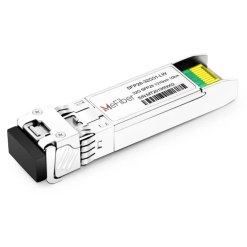
The SFP28 modules (Small Form-factor Pluggable 28) represents a highly versatile and powerful transceiver platform. While it shares the same physical dimensions as the legacy SFP and SFP+ modules, the SFP28 is engineered with enhanced electronics capable of supporting significantly higher data rates. As a result, this form factor is not limited to a single application. Instead, it serves as a flexible solution for multiple technologies, most notably 25G Ethernet and 32G Fibre Channel (32GFC). This dual-purpose capability makes the SFP28 an exceptionally valuable and cost-effective component for modern data centers, allowing operators to build high-speed server uplinks and low-latency Storage Area Networks (SANs) using the same compact, power-efficient hardware footprint.

Key Features

  • Multi-Rate Support: Natively supports a range of data rates, including 25Gbps for Ethernet and 32Gbps for Fibre Channel, providing ultimate flexibility.
  • Compact SFP Footprint: Utilizes the widely adopted SFP+ form factor, thereby enabling a simple, high-density upgrade path for existing infrastructure.
  • Application Versatility: Seamlessly powers different network types, from 25GbE server-to-switch links to high-performance 32GFC SAN fabrics.
  • Backward Compatibility: SFP28 ports are typically backward compatible with 10G SFP+ modules, ensuring smooth integration and protecting prior investments.
  • Power Efficiency: Delivers higher bandwidth per watt compared to previous-generation technologies, which leads to reduced operational costs.

Applications

The SFP28 module’s flexibility allows it to be deployed in several critical network environments. For instance, in enterprise and cloud data centers, 25G SFP28 modules are the standard for Top-of-Rack (ToR) switch-to-server connections, providing a 2.5x bandwidth improvement over 10G. Simultaneously, they are a foundational technology for 5G wireless fronthaul (eCPRI). On the other hand, 32G SFP28 modules are specifically designed for Storage Area Networks. They create the ultra-low latency, high-throughput links required between servers and storage arrays in a Fibre Channel fabric, which is essential for mission-critical applications.

Specifications (Common Variants)

Parameter 25GBASE-SR 25GBASE-LR 32GFC-SW 32GFC-LW
Primary Application 25G Ethernet 32G Fibre Channel
Data Rate 25.78 Gbps 28.05 Gbps
Wavelength 850nm 1310nm 850nm 1310nm
Fiber Type MMF (OM4) SMF (OS2) MMF (OM4) SMF (OS2)
Max Reach 100 meters 10 kilometers 100 meters 10 kilometers
Connector Duplex LC

SFP28: Unifying Ethernet and Storage

The primary advantage of the SFP28 platform is its ability to unify high-speed LAN and SAN connectivity within a single, consistent form factor. Previously, network architects had to manage different transceivers for Ethernet and Fibre Channel. Today, however, the SFP28 simplifies everything. This unification streamlines inventory management, reduces qualification complexity, and allows for more flexible switch and adapter designs that can cater to either network type. In conclusion, adopting the SFP28 standard means choosing a future-proof, efficient, and highly adaptable solution for all your high-performance connectivity needs beyond 10G.

FAQ (Technical & product category Questions)

1. What is an SFP28 module?

An SFP28 (Small Form-factor Pluggable 28) is a transceiver built in the popular SFP physical form factor but with upgraded capabilities to support data rates around 28Gbps. This enables it to be used for multiple technologies, primarily 25G Ethernet and 32G Fibre Channel.

2. What data rates do SFP28 modules support?

SFP28 modules are versatile and can support several data rates. The most common are 25Gbps for 25G Ethernet networks and 28.05Gbps for 32G Fibre Channel (32GFC). Some modules also offer dual-rate functionality to operate at 10Gbps for backward compatibility.

3. What is the difference between a 25G SFP28 and a 32G SFP28?

The key difference is the application and protocol. A 25G SFP28 is used for data networking and follows the IEEE 802.3by standard for 25G Ethernet. Conversely, a 32G SFP28 is used for Storage Area Networks (SANs) and follows the Fibre Channel (FC-PI-6) standard.

4. Can I use a 32G Fibre Channel SFP28 module in an Ethernet switch?

No. Although they share the same form factor, a 32GFC SFP28 module is designed for the Fibre Channel protocol and will not function in a switch port configured for Ethernet. You must match the module type (Ethernet or Fibre Channel) to the host port.

5. What is 32G Fibre Channel (32GFC) used for?

32GFC is a high-speed technology used exclusively for Storage Area Networks (SANs). It provides a dedicated, low-latency, and lossless connection between servers (initiators) and storage systems (targets), which is critical for databases and virtualization.

6. Is a 10G SFP28 the same as a 10G SFP+?

While an SFP28 port can accept a 10G SFP+ module, a product listed as a “10G SFP28” is typically a dual-rate module. This means it’s an SFP28 transceiver that has the capability to operate at either 25G or 10G, offering more flexibility in mixed-speed environments.

7. Can I use a 10G SFP+ module in an SFP28 port?

Yes, absolutely. SFP28 ports are designed with backward compatibility in mind. You can plug a standard 10G SFP+ module into an SFP28 port, and the port will automatically configure itself to operate at a 10G speed.

8. Why does the “28” in SFP28 matter?

The “28” signifies the maximum electrical lane speed of up to 28Gbps that the module’s hardware can handle. This headroom is necessary to accommodate the line rates of different protocols, such as 25.78Gbps for 25GbE and 28.05Gbps for 32GFC, ensuring error-free transmission.

This website uses cookies to ensure you get the best experience on our website.