
Overview: The New Standard for Server and 5G Connectivity

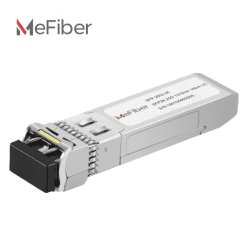
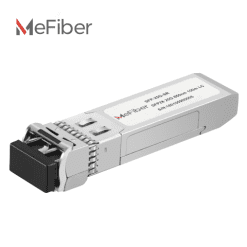
The 25G SFP28 transceiver is the cornerstone of modern, high-performance networking. Designed as a direct and highly efficient successor to 10G SFP+, the 25G SFP28 module delivers 2.5 times the bandwidth over a single lane, all while maintaining the same compact SFP physical form factor. This remarkable increase in performance without an increase in port density has made it the de-facto standard for server-to-switch connectivity in enterprise and cloud data centers. Furthermore, its combination of speed, low power consumption, and cost-effectiveness makes it the ideal technology for deploying next-generation 5G wireless fronthaul networks. In short, adopting 25G SFP28 technology is a strategic move towards building a faster, more scalable, and economically efficient network infrastructure.

Key Features

  • High-Speed Performance: Provides a single lane of 25.78Gbps, perfectly suited for the IEEE 802.3by 25GbE standard.
  • Cost-Effective Upgrade: Delivers a significantly lower cost-per-gigabit compared to upgrading from 10G to 40G, offering a more granular and affordable path.
  • Low Power Consumption: Consumes significantly less power per bit than 10G technology, leading to reduced operational expenses (OPEX).
  • High-Density Form Factor: Utilizes the existing SFP+ footprint, allowing for massive bandwidth upgrades without requiring new switch chassis or rack space.
  • Foundation for 100G: Serves as the fundamental building block for 100G (via 4x25G breakout), simplifying network architecture and migration paths.

Applications

The 25G SFP28 module is a versatile transceiver deployed in several critical high-speed environments. Primarily, it is used for Top-of-Rack (ToR) switch-to-server connections in data centers, where it has largely replaced 10G. Another major application is in the telecommunications sector for 5G fronthaul, specifically for carrying eCPRI/CPRI traffic between Baseband Units (BBUs) and Remote Radio Heads (RRHs). Additionally, these modules are frequently used for switch-to-switch interconnects in enterprise core and distribution layers, providing high-speed links between network segments.

Specifications (Common Variants)

Parameter 25GBASE-SR 25GBASE-LR 25GBASE-ER
Application Short Reach Data Center Long Reach Campus/DC Extended Reach Metro
Wavelength 850nm 1310nm 1310nm
Fiber Type MMF (OM4) SMF (OS2) SMF (OS2)
Max Reach 100 meters 10 kilometers 40 kilometers
Connector Duplex LC
Standard IEEE 802.3by

Why Upgrade from 10G to 25G?

The migration from 10G to 25G is driven by compelling technical and economic advantages. Firstly, modern CPUs and storage (like NVMe SSDs) can easily saturate a 10G link, making 25G a necessity to avoid bottlenecks. Secondly, the 25G standard provides a direct path to 100G, as four 25G lanes can be aggregated to create a 100G link. This was a significant improvement over the previous 10x10G approach for 100G. Consequently, the entire ecosystem, from switches to NICs and cables, is optimized for this 4x25G architecture, making 25G the most efficient and logical step-up for any organization looking to scale its network performance.

FAQ (Technical & product category Questions)

1. What is a 25G SFP28 transceiver?

A 25G SFP28 is an optical transceiver designed for 25 Gigabit Ethernet (25GbE) communication. It uses the SFP (Small Form-factor Pluggable) physical design but contains upgraded electronics to support a data rate of 25.78Gbps over a single lane.

2. What is the difference between 25G SFP28 SR and LR?

The main difference is the reach and fiber type. The SR (Short Reach) variant uses 850nm multimode fiber (MMF) for distances up to 100 meters, making it ideal for intra-rack connections. In contrast, the LR (Long Reach) variant uses 1310nm single-mode fiber (SMF) for distances up to 10 kilometers, suitable for connecting different racks or buildings.

3. Can I use a 25G SFP28 module in a 10G SFP+ port?

No. A 25G SFP28 module will not function in a port that is only rated for 10G SFP+. The port’s electronics cannot support the higher data rate. However, the reverse is true: you can use a 10G SFP+ module in a 25G SFP28 port due to backward compatibility.

4. Why is 25G Ethernet better than 40G Ethernet for server connections?

While 40G (4x10G) was an option, 25G (1x25G) became the preferred server connection because it offers higher performance on a single lane. This is more efficient and provides a better cost-per-gigabit. It also provides a cleaner, more direct upgrade path to 100G (4x25G).

5. What does the IEEE 802.3by standard define?

IEEE 802.3by is the official standard for 25 Gigabit Ethernet. It specifies the physical layer (PHY) and management parameters for transmitting 25GbE over various media, including fiber optic cables (like SR and LR) and twinax copper cables (CR).

6. What is the role of 25G SFP28 in 5G networks?

In 5G wireless networks, 25G SFP28 modules are critical for the “fronthaul” segment. They provide the high-speed, low-latency links needed to connect the remote radio heads (RRHs) on cell towers to the baseband units (BBUs) in a central office or data center, carrying the eCPRI protocol traffic.

This website uses cookies to ensure you get the best experience on our website.