
 +86 13823237984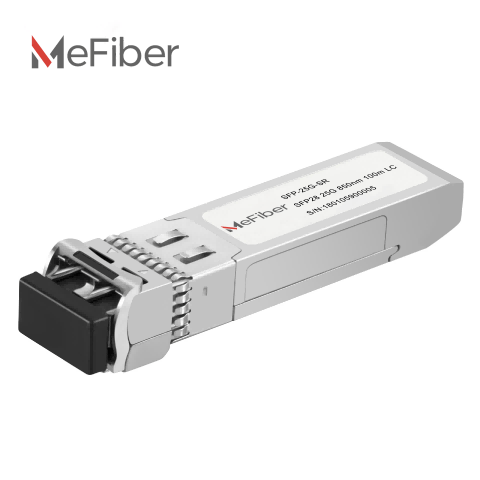
Upgrade to Blazing-Fast 25GbE Speeds: Cisco SFP-25G-SR-S Compatible Transceiver
Product Description:
Revolutionize your network’s performance with the Cisco SFP-25G-SR-S compatible transceiver. This high-speed module delivers a robust 25 Gigabit Ethernet (GbE) connection over 100 meters using multi-mode fiber (MMF) with an 850nm wavelength. Unleash the potential of your data center, enterprise network, or high-performance computing environment with this cost-effective upgrade solution.
Key Features and Benefits:
- Experience 25GbE Speeds: Significantly boost data transfer rates for faster network performance and seamless data flow.
- Cost-Effective Upgrade: Get comparable performance to Cisco OEM modules at a competitive price point.
- Reliable Connectivity: Industry-standard LC duplex connector ensures a strong and stable connection.
- Real-time Performance Monitoring: Digital Diagnostics Monitoring (DOM) enables proactive maintenance through valuable insights into module health.
- Multi-Source Agreement (MSA) Compliant: Guarantees seamless integration with existing network devices supporting Cisco SFP-25G-SR-S or similar models.
Applications:
- Data center interconnects
- Enterprise core and access networks
- High-performance computing clusters
- Server connectivity
Target Audience:
- Network administrators
- IT professionals seeking to boost network bandwidth
- Businesses requiring a cost-effective 25GbE solution
Frequently Asked Questions:
- Is this transceiver compatible with my Cisco switch?
Yes, this transceiver is compatible with Cisco and other network devices that support SFP28 form factor and 25GBASE-SR standards, including devices that use Cisco SFP-25G-SR-S or similar models.
- What type of fiber optic cable do I need?
This transceiver is designed for use with OM4 multi-mode fiber optic cable for optimal performance at 100 meters.
- Does this transceiver support hot-swapping?
Yes, this transceiver supports hot-swapping for convenient installation and removal without needing to power down your equipment.
Alternative Product Titles and Keywords:
- 25G SFP28 SR Transceiver (Cisco Compatible)
- Cisco SFP+ 25GbE Module
- 25GBASE-SR SFP+ DOM LC Transceiver
- 850nm 100m OM4 Multimode Fiber Optic Module
- SFP-25G-SR MSA Compliant Transceiver
- Cisco SFP-25G-SR-S equivalent
Conclusion:
The Cisco SFP-25G-SR-S compatible transceiver offers a cost-effective and dependable solution to upgrade your network to 25 Gigabit Ethernet speeds. This module delivers exceptional performance for data centers, enterprise networks, and HPC environments, all while leveraging readily available MMF infrastructure. Empower your business with this powerful module and experience a significant boost in network performance.


Reviews
There are no reviews yet.