
Overview of 16G SFP+ Transceivers
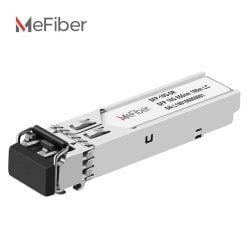
16G SFP+ (Small Form-factor Pluggable Plus) modules are high-performance transceivers designed specifically for the 16G Fibre Channel (16GFC) protocol. Although the name suggests 16Gbps, the actual line rate is a precise 14.025 Gbps. In short, these modules are the workhorses of modern Storage Area Networks (SANs), providing the high-speed, low-latency connectivity required between servers and storage arrays. The SFP+ form factor allows for high port density on Fibre Channel switches and Host Bus Adapters (HBAs).
Furthermore, one of the most critical features of 16GFC SFP+ modules is their multi-rate capability. They can automatically negotiate down to operate at slower Fibre Channel speeds, such as 8GFC (8.5 Gbps) and 4GFC (4.25 Gbps). Consequently, this backward compatibility ensures a smooth upgrade path for existing SAN infrastructure. Whether you are connecting over short distances within a data center rack using multimode fiber or linking buildings with single-mode fiber, there is a 16G SFP+ variant tailored to your needs.
Key Features and Benefits
Our 16G SFP+ modules are engineered for reliability and performance in demanding SAN environments. Indeed, their features are essential for mission-critical storage traffic.
-
- High-Speed Storage Connectivity: First and foremost, they provide a 14.025 Gbps data rate, doubling the performance of previous 8GFC networks to handle growing storage demands.
- Auto-Sensing Backward Compatibility: In addition, modules automatically detect and operate at 8GFC and 4GFC speeds, protecting your investment in older SAN equipment.
- Short Wave (SW) and Long Wave (LW) Options: We offer 16GFC-SW modules for multimode fiber (up to 125m) and 16GFC-LW modules for single-mode fiber (up to 10km).
* Guaranteed Vendor Compatibility: Each module is programmed to be fully compatible with major SAN switch vendors like Brocade, Cisco MDS, Dell, and others.
- Low Latency Performance: Fibre Channel is designed for low-latency block storage, and these modules ensure that performance is maintained from end to end.
Specifications
| Parameter | Value |
|---|---|
| Form Factor | SFP+ |
| Protocol | Fibre Channel (FC) |
| Max Data Rate | 14.025 Gbps (16GFC) |
| Supported Rates | 14.025 Gbps, 8.5 Gbps, 4.25 Gbps |
| Wavelength | 850nm (SW), 1310nm (LW) |
| Max Distance | 125m on OM4 MMF (SW), 10km on SMF (LW) |
| Fiber Type | Multimode Fiber (MMF), Single-Mode Fiber (SMF) |
| Connector | Duplex LC |
FAQ (Technical & product category Questions)
1. Can I use a 16G SFP+ module in an 8GFC port?
Yes, absolutely. 16G SFP+ modules are designed to be backward compatible. When you plug a 16G SFP+ into a switch port that is configured for 8GFC, the transceiver will automatically negotiate its speed down to match the port, in this case, 8.5 Gbps (8GFC).
2. What is the difference between 16GFC SW and LW?
The difference lies in the type of fiber and the distance they support. SW (Short Wave) uses a lower-cost 850nm laser and is designed for use with multimode fiber over short distances, typically up to 125 meters. LW (Long Wave) uses a 1310nm laser and is designed for long-distance transmission over single-mode fiber, up to 10 kilometers.
3. Is a 16GFC SFP+ the same as a 10G SFP+ for Ethernet?
No, they are not interchangeable. While they share the same SFP+ physical form factor, they are built for entirely different protocols and data rates. A 16GFC SFP+ (14.025 Gbps) will not work in an Ethernet switch port, and a 10G SFP+ Ethernet module (10.3125 Gbps) will not work in a Fibre Channel switch port.
4. Are your 16G SFP+ modules compatible with Brocade SAN switches?
Yes. We specifically code our modules to ensure 100% compatibility with the intended host system’s requirements. When you order, simply specify that you need the module for a Brocade switch (or Cisco MDS, etc.), and we will provide a fully compatible transceiver.
5. Why is the 16GFC data rate 14.025 Gbps instead of 16 Gbps?
Fibre Channel data rates are based on a specific line coding scheme (64b/66b) and a base rate that doubles with each generation. The “16G” is a marketing name for this generation. The actual, precise line rate required for interoperability in a 16GFC network is 14.025 Gbps.