
 +86 13823237984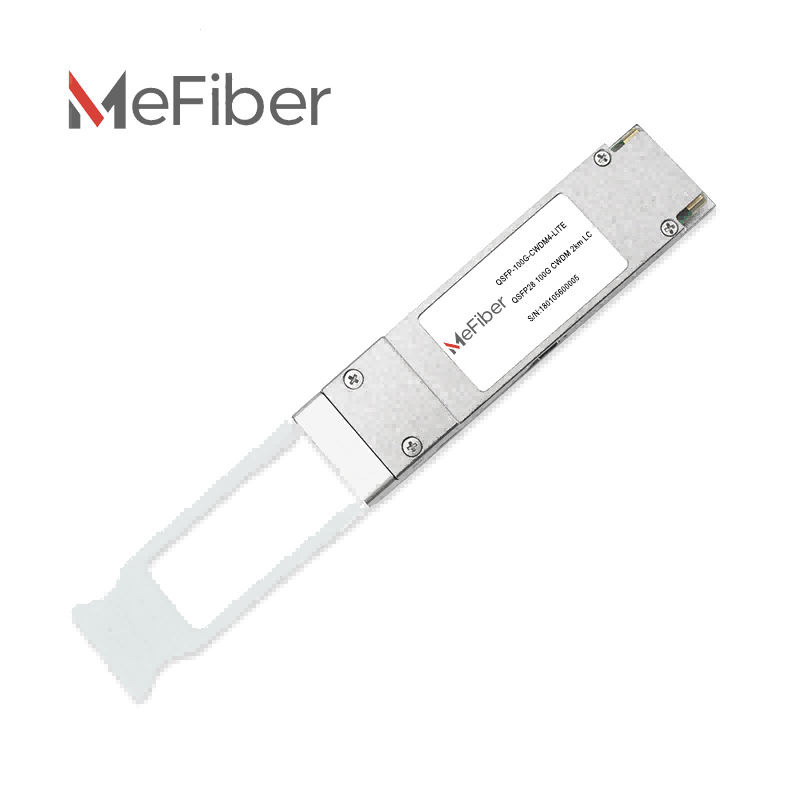
Cisco QSFP-100G-CWDM4-S Compatible 100GBASE-CWDM4 QSFP28 1310nm 2km OS2 DOM Duplex LC SMF Optical Transceiver Module
Revolutionize your network’s performance with the Cisco-compatible QSFP-100G-CWDM4 transceiver module. This cutting-edge technology empowers you to achieve unparalleled 100 Gigabit Ethernet (100GbE) connectivity over distances spanning up to 2 kilometers on single-mode fiber (SMF).
Key Features and Benefits:
- Cost-Effective CWDM4 Technology: Leverages Coarse Wavelength Division Multiplexing (CWDM4) to transmit four 25Gbps channels on a single fiber, reducing infrastructure costs and simplifying cable management.
- Long-Distance Reach: Ideal for connecting data centers, enterprise networks, and access points within a 2km radius, perfect for data center interconnects and backbone connections.
- Seamless Cisco Compatibility: Engineered for flawless integration with a wide range of Cisco switches supporting the QSFP-100G-CWDM4 standard.
- Real-Time Performance Monitoring: Digital Optical Monitoring (DOM) provides valuable insights into operational parameters for proactive maintenance and troubleshooting.
- Effortless Integration: Plug-and-play design facilitates swift installation, minimizing network downtime.
- Reliable Connections: Duplex LC connectors ensure secure and dependable signal transmission.
- 1310nm Wavelength: Optimized for extended-distance transmission on single-mode fiber.
- Durable Construction: Built to withstand the demanding environments of data centers and enterprises.
Applications:
- Data Center Interconnects
- High-Performance Computing Clusters
- Enterprise Network Backbone Connections
- Service Provider Networks
Target Audience:
- Network Engineers
- Data Center Managers
- IT Professionals
- Anyone seeking to upgrade their network to 100 Gigabit Ethernet speeds
Frequently Asked Questions:
- Is this transceiver compatible with my Cisco switch? Yes, this transceiver is compatible with a wide range of Cisco switches supporting the QSFP-100G-CWDM4 standard. Please consult your switch documentation for specific compatibility details.
- What is the difference between CWDM4 and other technologies? CWDM4 offers a cost-effective solution for 100GbE compared to traditional methods requiring multiple fibers. It is ideal for shorter distances like those within data centers or enterprise networks.
Conclusion:
Elevate your network to the next level of speed and efficiency with the Cisco-compatible QSFP-100G-CWDM4 transceiver module. Invest in this innovative technology and experience the future of data transmission!
Alternative Product Titles and Keywords/Tags:
- 100G QSFP28 CWDM4 Transceiver Module (Cisco Compatible)
- Cisco 100 Gigabit Ethernet QSFP+ Module
- 100G Single-Fiber Optic Transceiver (Cisco Compatible)
- 2km 100GbE CWDM4 QSFP+ Module
- Long-Reach QSFP+ Transceiver for Data Centers
- Cisco Compatible SFP-100G-CWDM4



Reviews
There are no reviews yet.