
Overview
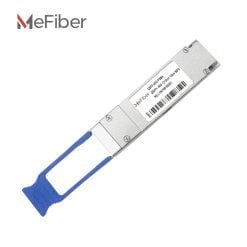
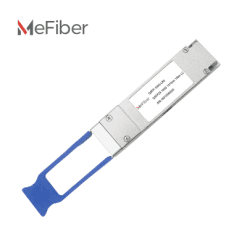
This module is a high-performance optical transceiver engineered as a fully compatible and cost-effective equivalent to the Cisco QSFP-100G-ER4L-S. It is designed to the 100GBASE-ER4L (Extended Reach Lite) standard, which enables 100 Gigabit Ethernet connectivity over distances up to 40 kilometers. This impressive reach is achieved using four multiplexed 25Gb/s lanes on the LAN-WDM wavelength grid, combined with a high-sensitivity APD (Avalanche Photodiode) receiver and a Semiconductor Optical Amplifier (SOA) to boost the optical signal.
The “Lite” designation typically indicates compliance with the OTL4.4 interface standard and is designed to interoperate with other compliant ER4L modules. It is an ideal solution for service provider networks, metro-area links, and long-distance data center interconnects (DCI) that require robust, high-bandwidth connections beyond the reach of standard LR4 optics.
Key Features
- 100% compatible with Cisco platforms that support the QSFP-100G-ER4L-S module.
- Standard: Compliant with 100GBASE-ER4L and QSFP28 MSA.
- Extended Reach: Capable of transmitting 100GbE up to 40km over single-mode fiber.
- Technology: Utilizes 4x25G LAN-WDM lanes with an integrated SOA and APD receiver.
- Data Rate: 103.1 Gbps aggregate.
- Connector: Standard Duplex LC/UPC.
- Wavelength: LAN-WDM grid (1295nm, 1300nm, 1304nm, 1309nm).
- Built-in Digital Optical Monitoring (DOM/DDM) for real-time performance tracking.
- Hot-pluggable QSFP28 form factor.
Applications
The QSFP-100G-ER4L-S compatible module is purpose-built for:
- Long-haul Data Center Interconnects (DCI) between sites.
- Metro Ethernet and service provider access networks.
- Campus-to-campus and enterprise WAN connections.
- High-speed links for mobile backhaul infrastructure.
Specifications
| Parameter | Value |
|---|---|
| Compatible Part Number | QSFP-100G-ER4L-S |
| Form Factor | QSFP28 |
| Standard | 100GBASE-ER4L |
| Data Rate | 103.1 Gbps |
| Wavelength | LAN-WDM Grid |
| Max Distance | 40km |
| Fiber Type | Single-Mode Fiber (SMF) |
| Connector Type | Duplex LC/UPC |
| DOM/DDM Support | Yes |
| Operating Temperature | 0°C to 70°C (32°F to 158°F) |
Cross-Platform Compatibility
Programmed for seamless integration with Cisco equipment, this module’s strict adherence to 100GBASE-ER4L standards ensures it can also be deployed in networking hardware from other major manufacturers that support this optical specification.
| MANUFACTURER | EQUIVALENT PART NUMBER |
|---|---|
| Arista | QSFP-100G-ER4L |
| Juniper | JNP-QSFP-100G-ER4L |
| Extreme | 100G-QSFP28-ER4L-40KM |
| MSA Generic | QSFP-100G-ER4L |
FAQ (Technical & Product Questions)
1. What is the difference between 100GBASE-ER4L and 100GBASE-LR4?
The primary difference is the reach. 100GBASE-LR4 (Long Reach) is standardized for links up to 10km. 100GBASE-ER4L (Extended Reach Lite) is designed for much longer links, up to 40km. To achieve this, ER4L modules incorporate a Semiconductor Optical Amplifier (SOA) and a more sensitive APD receiver, which are not present in standard LR4 modules.
2. What does the “L” in ER4L signify?
The “L” stands for “Lite”. It refers to a specific implementation of the 100G 40km standard that typically has different optical specifications or power consumption targets compared to the original IEEE 100GBASE-ER4 standard. It is crucial to ensure that modules at both ends of the link are of the same type (e.g., ER4L to ER4L) for guaranteed interoperability.
3. Does this module require Forward Error Correction (FEC)?
Yes, to reliably achieve the maximum 40km distance, the host device (switch, router) must enable KR4 FEC as defined in IEEE 802.3bj. The module relies on the host’s error correction capabilities to overcome signal degradation over the long fiber span.
4. Can a 100GBASE-ER4L module connect to a 100GBASE-LR4 module?
No, this is not a supported configuration. The transmit power of an ER4L module is significantly higher than an LR4 module and would likely overload the receiver on the LR4 side, preventing a stable link from forming. Always use the same type of optic on both ends of a fiber connection.
5. What is LAN-WDM technology?
LAN-WDM (Local Area Network Wavelength Division Multiplexing) is the technology used in this module to transmit 100Gbps. It uses four lasers on four different, standardized wavelengths (around 1310nm) to carry four separate 25Gbps data streams. These are combined (multiplexed) onto a single fiber for transmission and separated (demultiplexed) at the receiving end. This is what allows 100G to be sent over a standard Duplex LC fiber pair.


Reviews
There are no reviews yet.