
Overview
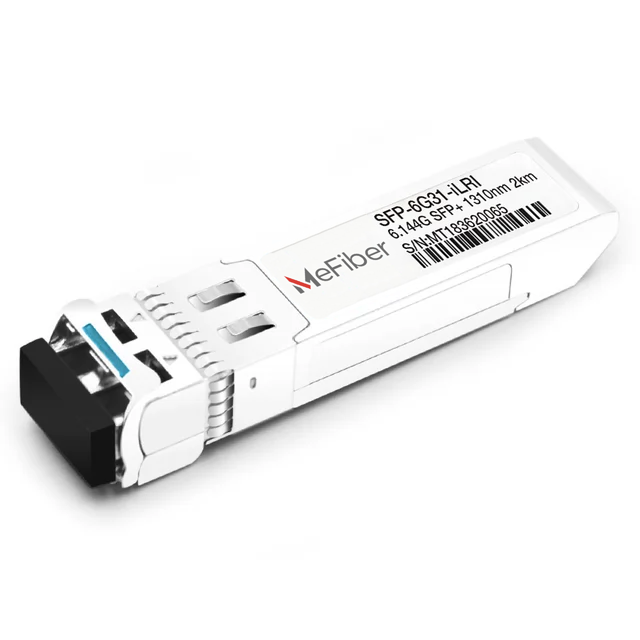
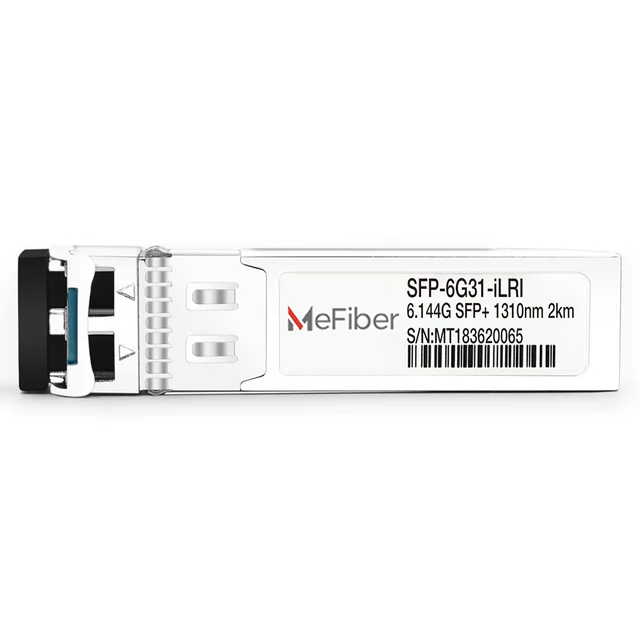
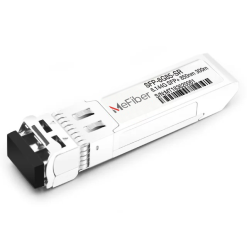
The SFP-6G31-ILRI is a specialized optical transceiver module engineered for the rigorous demands of mobile network infrastructure. It operates within the SFP+ form factor but is specifically designed to support CPRI and OBSAI data rates up to 6.144 Gbps. Consequently, this module is an essential component for establishing reliable, high-speed links in mobile fronthaul networks, particularly for connecting Baseband Units (BBUs) to Remote Radio Heads (RRHs).
Utilizing a reliable 1310nm DFB laser, this transceiver provides a stable connection over single-mode fiber for distances up to 2 kilometers, meeting the Intermediate Long Reach (ILR) specification. Furthermore, its robust design ensures optimal performance in the demanding environments typical of base station deployments. This module offers a cost-effective and power-efficient solution for scaling and upgrading 4G/LTE and 5G network architectures.
Key Features
- Multi-Rate Support: Designed for CPRI and OBSAI standards, supporting data rates from 1.2288 Gbps to 6.144 Gbps.
- Intermediate Long Reach (ILR): Achieves a transmission distance of up to 2km over standard Single-Mode Fiber (SMF G.652).
- High-Performance Laser: Features a high-quality 1310nm DFB transmitter and PIN photo-detector for superior signal integrity.
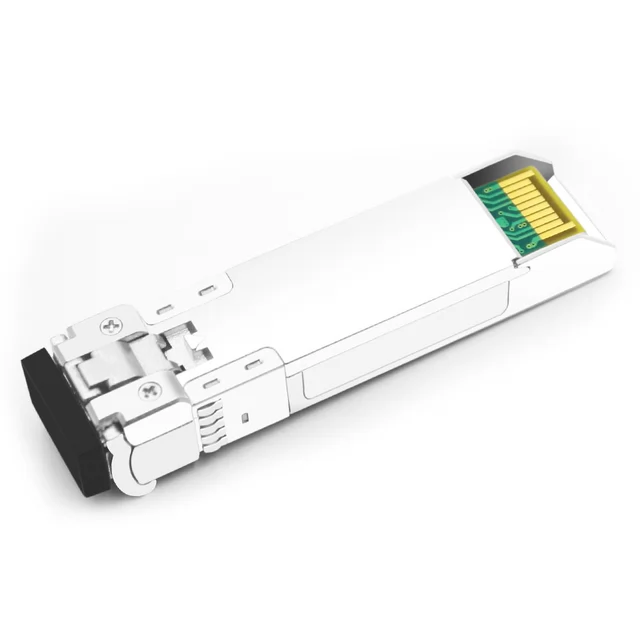
- SFP+ Form Factor: Hot-pluggable SFP+ footprint allows for easy installation and replacement without system downtime.
- Duplex LC Connector: Equipped with a standard duplex LC optical interface for seamless integration with existing fiber cabling.
- Digital Diagnostics (DDM): Compliant with SFF-8472 for real-time monitoring of key parameters like temperature, voltage, and optical power.
- Industrial Temperature Option: Built to operate reliably across a wide temperature range, suitable for outdoor deployments.
- Low Power Consumption: Engineered for power efficiency to minimize operational costs in base station equipment.
Applications
The SFP-6G31-ILRI is not intended for standard Ethernet but is purpose-built for specialized telecom applications. Therefore, it is the ideal choice for:
- Mobile Fronthaul Networks (4G/LTE, 5G).
- Connecting Baseband Units (BBU) to Remote Radio Heads (RRH).
- CPRI data rate options 2, 3, 4, 5, 6, and 7.
- OBSAI data rate options 1.536 Gbps, 3.072 Gbps, and 6.144 Gbps.
- Wireless Base Station and Distributed Antenna Systems (DAS).
Technical Specifications
| Parameter | Value |
|---|---|
| Model Number | SFP-6G31-ILRI Compatible |
| Form Factor | SFP+ |
| Max Data Rate | 6.144 Gbps (CPRI Option 7) |
| Wavelength | 1310nm |
| Maximum Cable Distance | 2km |
| Connector | LC Duplex |
| Fiber Type | Single-Mode Fiber (SMF) |
| Transmitter Type | DFB Laser |
| Receiver Type | PIN |
| DDM/DOM Support | Yes |
| Commercial Temperature Range | 0°C to 70°C (32 to 158°F) |
| Industrial Temperature Range | -40°C to 85°C (-40 to 185°F) |
| Power Consumption | < 1.0W |
Advantages
The key advantage of the SFP-6G31-ILRI is its precise optimization for CPRI and OBSAI protocols. Unlike generic data transceivers, it guarantees the specific data rates and low latency required for stable BBU-RRH communication. Moreover, its compliance with MSA standards ensures it is fully interoperable with equipment from major telecom vendors such as Ericsson, Nokia, and Huawei. This provides network engineers with a reliable, second-source option for expanding their fronthaul capacity.
In addition, each module is subjected to rigorous testing to ensure it can withstand the environmental and operational stresses of a mobile network deployment. This commitment to quality, combined with its specialized feature set, makes it an indispensable tool for building the next generation of wireless communication networks, ensuring both performance and long-term reliability.
FAQ (Technical & Product Questions)
1. What is CPRI and why is this module used for it?
CPRI (Common Public Radio Interface) is a standard protocol used in mobile networks to carry data between base station radio equipment. This module is specifically designed to support the precise data rates, like 6.144 Gbps for CPRI Option 7, required by this protocol.
2. Can I use this SFP-6G31-ILRI module for a standard 10G Ethernet link?
No, this module is not designed for Ethernet. It is a single-rate or multi-rate transceiver locked to CPRI/OBSAI data rates. Using it in a standard 10G SFP+ Ethernet port will not result in a successful link.
3. What does ILR stand for in the product name?
ILR stands for Intermediate Long Reach. In the context of CPRI/OBSAI standards, this specifies a transmission distance of up to 2 kilometers, which is suitable for many connections between a central BBU and a remote cell tower radio.
4. Is this module compatible with equipment from major telecom vendors?
Yes, this module is built to be MSA (Multi-Source Agreement) compliant and is designed for full interoperability with host equipment from major telecom infrastructure providers like Nokia, Ericsson, Samsung, and Huawei that require 6G CPRI transceivers.
5. What type of fiber optic cable is required for this module?
This transceiver requires a standard Single-Mode Fiber (SMF) patch cable, typically OS1 or OS2 grade, with duplex LC connectors on both ends to establish a connection over its 2km maximum distance.
6. Does this module support Digital Diagnostics Monitoring (DDM)?
Yes, it fully supports DDM, also known as DOM (Digital Optical Monitoring). This allows the host system to access real-time operating parameters of the module, such as optical transmit power, receive power, temperature, and supply voltage.
7. What is the difference between a commercial and industrial temperature grade module?
A commercial grade module operates from 0 to 70 degrees Celsius and is suitable for climate-controlled indoor environments. An industrial grade module, which is often required for this application, can operate in a much wider range, from -40 to 85 degrees Celsius, making it ideal for outdoor base station cabinets.
8. Why is the data rate specified as 6.144 Gbps instead of just 6G?
The 6.144 Gbps rate is the exact specification for CPRI Line Rate Option 7. While it is often referred to as 6G for simplicity, using the precise data rate is important in the context of telecommunications to ensure protocol compatibility and proper link function.


Reviews
There are no reviews yet.